
Queering Thanksgiving: LGBTQ+ Tips for Surviving the Holidays
Much to my sorrow, the season of bats and ghosts and witches has passed. Leaves are turning from the yellow and orange of embers to the brown of decay. I hear Mariah Carey’s voice on the wind, followed swiftly by omnipresent a capella tones. Snow has begun to fall, and the holidays are upon as.
When I was younger, I loved the holidays this time of year. Then I grew to hate them. Over time, I’ve fallen back into that love with some, and with others such as Thanksgiving, I’ve developed at least a willing tolerance.
Thanksgiving, and later December holidays, can be especially tough for a lot of LGBTQ+ people. Let’s look at some queer, crip takes on the holiday and ways you can keep yourself sane and, hopefully, happy and connected.
Table of Contents
Thanksgiving? Friendsgiving? Thanksgaming? Where do we start?
The origins of American Thanksgiving are muddy, but the influence of colonialism and the erasure of genocide towards the Indigenous peoples from whom we stole this land is undeniable. It has also traditionally been a time where blood families are forced together, regardless of how happy the participants are to be there. A time of faux smiles and invasive questions, but also, to some, a time of love, connection, and giving thanks.
For LGBTQ+ people, Thanksgiving carries extra challenges, as we often face more ostracization from our birth families. When in the closet, we may experience fear, resentment, and distancing at the Thanksgiving table. For some, coming out means not being invited back to that table.
As such, alternative celebrations have arisen. We did what we always do: we adapted and found a way to still come together. The article linked here is an interesting one, and even if I don’t always agree with Birdsall, I have to sharing this scathing quote about Thanksgiving during the AIDS crisis:
Mainstream opinion held that gays were spreading the disease everywhere that November: let the promiscuous animals spread their gay sweat and saliva over their gay turkey and gay yams; spread the deadly droplets and miasma of doom around their own kind.
As much as I think turkey is a weak meat and am ambivalent towards yams, gay turkey, gay yams, and a miasma of doom sound like a great Saturday night.
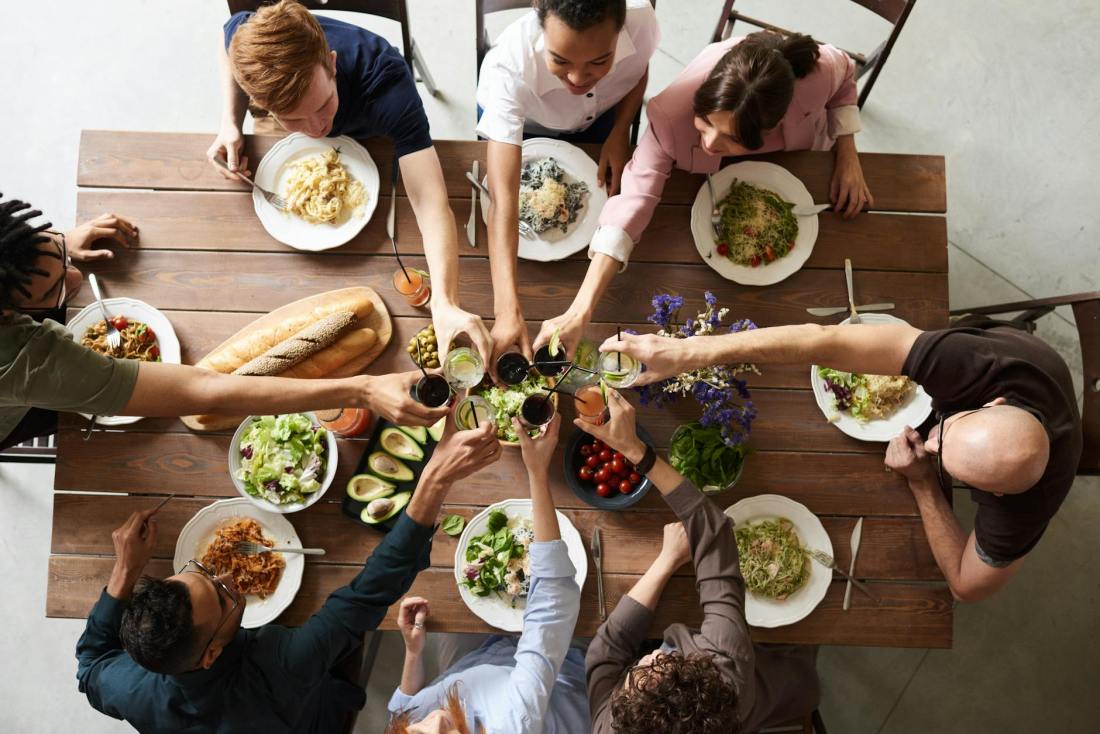
Ok, back to the post. Queer Thanksgivings didn’t always have their own names, but the term Friendsgiving became popular sometime after the turn of the 21st century. There is also Rachel’s own Thanksgaming, which is probably closest to what I’ll be celebrating this year (playing Dragon Age: The Veilguard with some frozen food).
The key thing that ties all these celebrations together is that they’re focused on community. Not an assigned community, but a chosen one. Everyone there wants to be there. I like Birdsall’s phrasing of an intentional staying away:
Thanksgiving has always had a tradition of the unattached from home—so-called holiday orphans, people unable to make it back to blood family because of distance: students, soldiers, workers, but Friendsgiving became this different thing, a conscious staying away.
For some, these alt-Thanksgivings are the best way to spend the holiday. Others are, willingly or not, at the blood family dinner table. And still others, like myself, prefer to do very little to acknowledge the day.
Normally, I like to focus on how we can thrive. But the holidays are hard, and sometimes the best thing we can do is survive. So what follows are some tips for surviving the holiday, with whatever method of (non)celebration you’ll be engaging in.
LGBTQ+ Survival Tips for Thanksgiving and Beyond
Thanksgiving with birth family
If you’re going to be spending the holiday with your birth family and that isn’t exactly the easiest thing for you, then read these tips. They focus on ways you can keep yourself safe and sane amidst rough family gatherings.
One other note: it’s tempting to fall into doomscrolling as an escape. But this escape can be detrimental, as the more unresolved emotions you have bouncing around unacknowledged in your head, the more anxiety can build. If you need to take a break to be on social media for a bit, do so. But make sure you’re also acknowledging your bodymind’s needs.
If it sounds fun to you, consider the power of roleplaying. You can pretend you’re visiting your family as an alien anthropologist or a favorite character. It helps give some distance and also engage with play.
Have at least one comfort person available. It could be a friend or partner you bring to dinner, or somewhere nearby. Maybe they’re on the other side of the country but you can video call. You can’t rely entirely on them, but make sure you have someone for when you need a break full of comforting words.
Know your boundaries and how hard you can stick to them. If you’re able, walk away from conversations that are harmful, and make it clear you will do so. When it’s safe, advocating for your own boundaries can save you a lot of hassle.
Have care plans for before and/or after the celebration. What do you need to prepare? What aids your recovery? Make lists, and either schedule specific things or leave your options open.
Find joy in food. It nourishes you. Take a second to appreciate that.
Take moments of slowness where you can. A brief break on the porch, a bathroom trip, whatever works. Time for your brain to wind down from managing people. Use this time to recenter yourself and see what bodymind needs might require attention.
Bring fidgets, stims and comfort items. If you’re not comfortable playing with them in front of family, you can always take a few minutes in the restroom for fidgets and comfort.
(post continues below)
Want to receive once-a-month updates from me, directly in your inbox? Add your email below to subscribe to my newsletter. To prevent spam, you may get an email asking you to confirm your subscription.
Friendsgiving and community celebrations
This section is for those attending alternative celebrations, ones focused on chosen family or larger communities. Tips to increase connection and build joyous spaces.
If you’re putting together an alternative celebration, don’t forget that access needs and inclusion are vital to planning. Disabled folks often end up as holiday orphans, and you don’t want to perpetuate that at your own celebration.
- Make sure expectations are clear, so no one is let down or hurt. How close is this to a traditional Thanksgiving celebration? Are there any specific rituals you’re going to follow?
- Choose at least one person at the celebration and tell them not just that you appreciate them, but why. Share gratitude for your relationships.
- Acknowledge when you need to take a break. Even these celebrations can bring up hurt or trauma. There’s nothing wrong with stepping away for a few minutes.
- Think about where your food came from—both where it was grown/raised and who made it. Express gratitude, aloud or to yourself, for these sources of nourishment.
- Give yourself rest time. Even if you’re enjoying yourself, social things can still be tiring. If you need to recover afterwards, allow that.
- Fidgets and stim toys are great here too! As are other accessibility tools—earplugs, sunglasses, comfy clothing, etc.
Thanksgaming or non-celebration
Tips here are centered around minimal or no celebrations for Thanksgiving, and considerations for you to take care of yourself in that external space. You can also see our previous thoughts on creating safe space at home.
- Consider the vibe you want for this time. Cozy nourishment? Healthy distractedness? Focused work?
- Make a list of activities, places, people, and things that can support that vibe.
- Remember to nourish yourself, even if you’re not having a big meal. Physical nourishment, but also spiritual and emotional.
- Have outlets for emotions as they come up. What works for you? Writing? Art? Games? Journaling? Acknowledge these emotions and work through them in the way that feels best.
- Try taking some time disconnected from screens. See how it feels to give your eyes and brain a rest. You don’t have to be “on” all the time.
However you’re spending the Thanksgiving season, know that there are people who care about you, and there are so many ways to promote joy, love, and safety. Holidays shouldn’t be times of dread, and each year I find myself closer to feeling an unbridled joy for this time of year, especially the Solstice. I hope that you can find that too.
Do you have other tips on building happier, safer holiday celebrations? I’d love to add to these lists! Let me know in the comments on this post if you’re so inclined.
Want to receive once-a-month updates from me, directly in your inbox? Add your email below to subscribe to my newsletter. To prevent spam, you may get an email asking you to confirm your subscription.
No Comments