
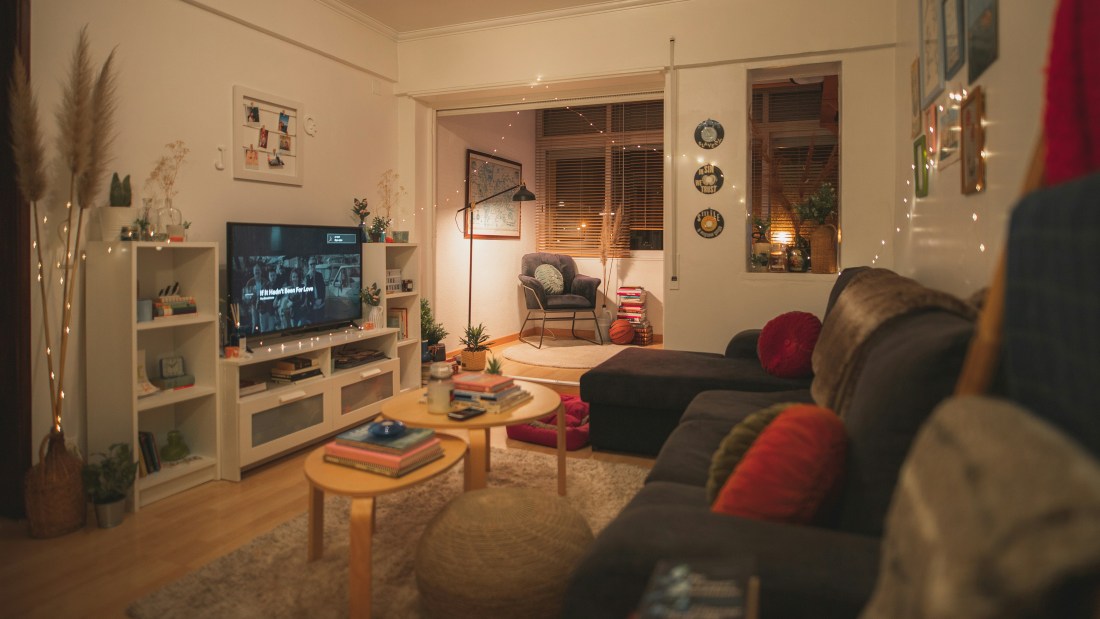
10 Thoughts on Creating Safe Space at Home
I’ve been thinking about what I have to contribute to queer and neurodivergent sanity post-election, when I came across this post: “10 Simple Things to Make You Happier At Home.” I had some strong reactions.
Table of Contents
Initial Reactions
First, many of these do not make me happier, especially #1. (You don’t have to go look: it’s “Make Your Bed.”)
Second, in our current world, having a home space that feels safe at least some of the time is vital. It’s likely that we have a few years of heavy fighting ahead, and we need spaces in which to rejuvenate. Your home space could be a whole house or apartment, one room, or maybe even part of that room. Size does not matter here. What matters is having a space that you can settle into comfortably, look around yourself and have the sense that you’re safe enough right now.
Third, forget about happy. Go for safety, meaning, and wonder. Happiness can be transient, when other emotions arise that are helpful in the moment, we can feel that we’re failing at it. Wonder and meaning (and even safety) are also often connected with interest, especially for neurodivergent folks.
Fourth, from Ashton: Articles such as the one Rachel found often come out of an attempt to jump in on, or continue profiting off of, the monetized self-care industry. This industry isn’t geared towards supporting long-term mental health, but instead short-term fixes that get you to spend your money or time. Many of the tips are also designed to get you productive again, back to productivity/grind culture, rather than truly nourishing yourself. Remember, self-care and rest should not be monetized, and they shouldn’t only be a reward.
With that in mind, here’s my list of things that could help you feel safety, meaning, and wonder in your home, starting with physical things. This list is designed from a neurodivergent perspective, but as people vary so greatly, anyone could pull beneficial bits and pieces from it.
List: Ideas for Nurturing Safety and Comfort
1. Avoid making your bed
That was #1 on the linked article, and just, no (unless you love doing it). Not only can this exacerbate productivity culture harm, but it can create a better environment for dust mites.
Bonus: set up your bed to be the way you’ll want it when you come back to it later. For me this means a huge pile of pillows I can sink into, the sheets and blankets in whatever inviting pile they went into when I got up, and a soft blanket tossed over the lower part of the bed for my cats to sleep on. Bed-as-invitation can be a lovely feeling and can be as simple as tossing a plushie, pillow or blanket where it will call to you later.
2. Have a low stim place and a high stim place
This could be sections of a room, or two different rooms if you have more than one. If you’re crunched for space, it can even be two sections of a bookshelf. One area has few things in it, and these things are soothing to you. (Honestly, that can even be a blank section of wall.) The other area is full of cool stuff. Things that activate your interests or engage your senses.
When you’re overstimulated, you can spend time in the low stim space to settle down. If you’re understimulated, you have the high stim environment. Anything to help you get back to equilibrium.
3. Display special interests
Your high stim area is an ideal place for this! Find things that remind you of whatever you collect and adore and get into. Put them in areas where you often look. Not only will this bring you joy, but it can help clear your mind of negative ruminations by refocusing you on what you’re into.
Bonus: also put up some items/images that remind you of great times you’ve had, accomplishments, and loved ones. Neurodivergent brains can have trouble keeping in mind folks we love (object permanence) and reminders can be a source of many positive emotions.
4. Find your minimal ideal result for housework
Cultural forces and influencers conspire to tell us we need to have things clean and tidy. Ignore those assholes. What is the minimum that has you feel pretty good about life? For example, my minimal ideal result in the kitchen is that there’s enough space on the counters that I could prep a meal, and there are only food things in the kitchen (not mail). Emotionally, having counter space and a lack of non-kitchen items is 92% as good as having a spotless kitchen. For me, at least.
Minimal ideal takes a few minutes, spotless takes what feels like 2–3 hours. I can roll through a couple of busy days keeping the kitchen at the minimal ideal until I have the space and energy to do dishes.
Doing a minimal ideal reset in one or two spaces can lift your mood without draining too much energy. Please resist the urge to tidy one space and think this means you should tidy another. Give yourself permission and gratitude to only do tasks as often as actually needed. Stop trying to be perfect or even good— adequate is great! It’s okay to tidy one space and enjoy it. Bonus points if you tidy your low stim space more than any others.
5. Give yourself credit for how long it feels to do a task
I’m convinced it takes half an hour to do the dishes. I frequently time myself, because it almost always takes less than 10 minutes on the clock. Knowing both the clock time of a common task and the felt-sense time means we can congratulate ourselves on both! This can be a fun combo of “hah, I told you it would take less than 10 minutes!” and “Wow, great work doing that hard thing that felt like half an hour.”
6. Connect present and future selves around housework
Yes, I’m still on housework because this is one of the places where we can be huge jerks to ourselves and have our home spaces feel unsafe. I’m big on countering those narratives and being kind to ourselves.
When you feel there’s housework to be done, consider having a brief counsel with your future self. This can be:
Present Me: “Hey Future Me, I’m having a rough day, I’m super tired, are you okay doing the dishes or tidying up tomorrow?”
Future Me: “Yeah, I got you. Go to bed and play games!”
Or
Future Me: “Tomorrow’s going to be intense. Remember, you don’t need to fully unload the dishwasher to put dirty dishes in and run it. (A tip I’m borrowing from How to Keep House While Drowning by KC Davis.) Could you do that?”
Present Me: “Ugh, okay, but promise me we’ll play games more tomorrow.”
Future Me: “You’re on! And I love you for taking care of us this way.”
Present Me: “Same.”
Also, after time passes and Future Me becomes Present Me, I try to validate my former present self by admiring the housework I did.
Is my self-talk always that positive and flowery? Of course not, but more and more I play with it, because of how well it counteracts all the times I was not kind to myself. Your self-talk doesn’t have to be flowery, as long as you can treat yourself gently.
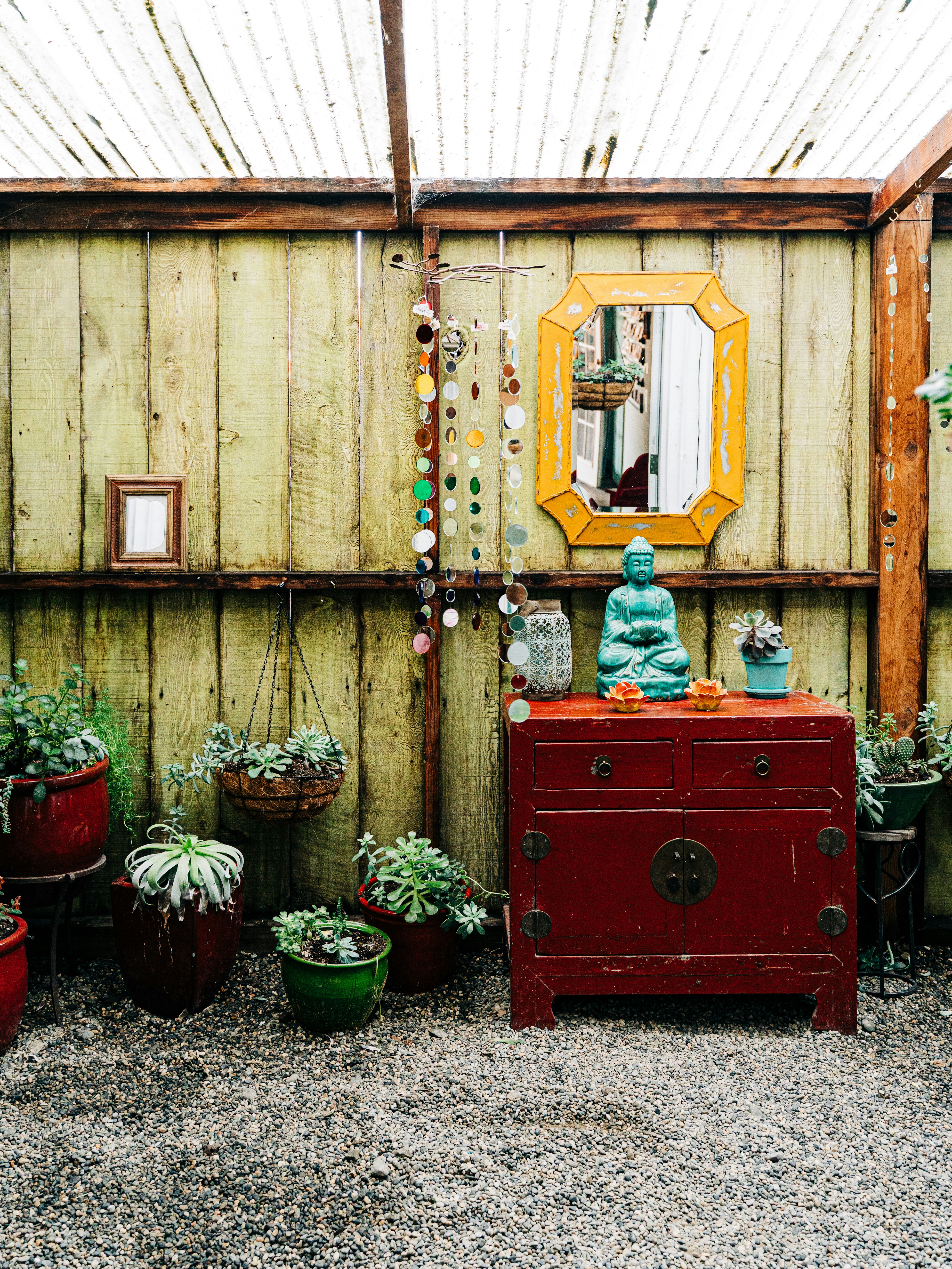
7. Add more yum, less (or no) ick
This pertains to household tasks and to enjoying spaces, movement, sounds, textures, all of it! You don’t have to push through yuck or icky feelings in your own space. Pause and ask what could make your space or task physically feel better:
- Do you need to move more or less?
- Sounds–more or less? Or a specific type?
- Textures–do you need gloves if you’re cleaning? Do you need to put on different clothes? What would feel luxurious and delicious?
- Lights–too bright? Not bright enough? Warmer or cooler?
8. Respect your chronotype
You probably have a sense of whether you’re a morning or evening person. You may have also figured out that it works best to do your harder/more focused tasks at the time of day when you feel stronger. I recommend giving yourself a break during the soft time in your day.
- For morning people, stop pushing yourself to do things after about 7 pm. Instead, do what’s enjoyable and pulls your attention.
- Evening people, don’t try to leap out of bed into action. Don’t push until around noon or a bit later.
- There are other patterns so if you find, like me, that you’re strong in the morning, softest midday and mildly strong in the evenings, please take a great midday nap and a long, enjoyable lunch.
9. Give yourself hours and days of solitude as needed
I know science these days is all over how healthy human connection is— but it’s also been showing that poor connections can be unhealthy. And for neurodivergent folks (especially those who are also introverts), we may need a lot of healthy solitude. (That’s a real thing with science behind it too.)
How do you know how often it’s needed? Based on feelings of dread, doom or screaming in your own mind— and based on feelings of longing and desire to get into your special interests. If being around people is making you feel anxious or like you want to crawl out of your skin, you might be in need of more solitude.
You can connect this to chronotypes above and find out if there’s a time of day when it’s easy and fun to connect with others, and times when that stresses you out. And remember, it may not be a daily cycle— there may be days of the week, month, or lunar month when you want to connect and days when you don’t.
10. Choose your own adventure
You get to fill in this one with something you’ve learned that really works for you! You’re the expert on you. What makes you feel safer, meaningful, joyous, and wonderful in your home space/s?
I’d love to know what your #10 is! Let me know in the comments below or on my Instagram and Facebook pages.
Want to receive once-a-month updates from me, directly in your inbox? Add your email below to subscribe to my newsletter. To prevent spam, you may get a confirmation email asking you to confirm your subscription.
No Comments