
Neurodivergence Without Shame, Part 3: Masking and Meltdowns
Editor’s note: This is an edited transcription of a conversation between myself and Rachel. It is the third of four posts made out of this conversation. We encourage you to read part one and two first, if you haven’t already. Anything in brackets is content I have added in editing. Occasionally, I left in our repetitions, stutters, and verbal idiosyncrasies to better reflect how we both talk. —Ashton
In this post, we discuss what masking feels like for both of us, as well as the various ways meltdowns/shutdowns can show up for folks. We offer personal insights, experiences, and reflections for better understanding these topics.
Content warning: This post contains general discussion of suicidal ideation.
Table of Contents
Click on each section for quick navigation.
Masking
Rachel Gold: There are a lot of good, and not so good, neurodivergence tests on the internet. The CAT-Q has been really interesting and eye-opening for me. I scored very highly on that. Also the book Unmasking Autism has been great.
Rachel: For a lot of folks of my generation, we learned to mask because that was the pathway to social acceptance. (This isn’t only true of my generation.) It’s become so second nature for me that I’m wondering, why am I exhausted? Oh, right. Masking.
Rachel: Like yesterday during our hardware store trip, in the middle of my banter with the paint dude, I was actually thinking: wow, my small talk algorithm is still really working. I taught myself, in my late 20s and early 30s, how to be effectively social. I didn’t realize that not everyone does that.
Rachel: Sometimes I’ll say to people, “Well, what’s your social algorithm?” And they look at me like I’m nuts. I realize, “Oh, you don’t have a social algorithm. You just do this automatically. Got it.” I appreciate having space to acknowledge that and also give myself permission to be okay when I sound a little robotic. And to give myself credit for all the things I’ve learned. I embarked on a fairly intense, self-directed program to learn these things, so that I am better with people because I needed to be better with people to accomplish what I wanted.
Ashton Rose: Some of our readers might not know what masking means, and there are a lot of definitions out there. Do you have one that you like?
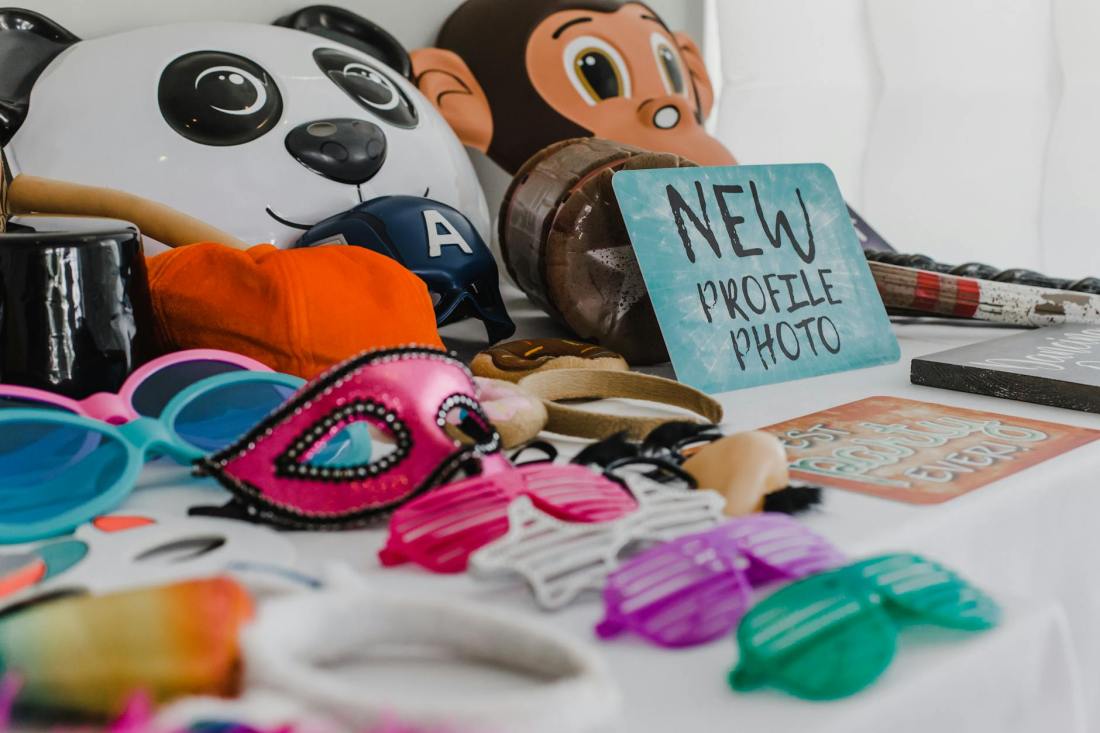
Rachel: Let me start with a story. I worked at a marketing firm for 10 years, because it was a pretty great place to work. But every time I had to meet with clients, I would say to my coworkers, “I got up this morning and I put on the Batsuit,” which is a reference to Batman’s costume, but meant my corporate gear– including the relevant mental states, i.e. masking. And they’d say, “Ha ha, you’re so funny.” I thought: you don’t realize how costumey this is. How much I’m play-acting at this.
Rachel: I created a persona that I inhabit for interacting with certain types of people. For me, masking is having built some psychological masks that go over my default personality and let me appear in a way that’s expected. Sometimes in order to meet goals, I need to show up the way that’s expected, not the way that’s interesting or natural for me.
Rachel: By a certain point, probably in my 30s, I was so good at masking, it was hard even for me to tell the difference. The way that I could tell was that I got depressed for a couple of years. When I’m heavily embodying one of those masks for a long time, without taking breaks to be myself, I get depressed, low energy, disinterested. Things don’t feel worthwhile anymore. Because I’m not actually showing up as myself.
Ashton: I like that you say masks, plural, right? Because different social situations will require different masks. Over time, you learn how to build those. Maybe you’ve got your general work mask that can be modified, and then a general party mask that can be modified, and then your hardware store mask.
Rachel: I think of that as a set of algorithms. I have a total set of “how to banter with a person in a store” algorithms, along with “talking to someone in the checkout line” and others.
Ashton: And it’s not always conscious, either. Sometimes you do consciously think, I feel like I’m expected to present a certain way in this scenario. But for me, at times I didn’t know I was doing it. For a long time. And there are still moments when somebody will mention how good I am at something or the way I do something, and I’ll think, oh, that’s not normal me. That’s not how I would do this at home.
Rachel: Right. Yes.
Ashton: So there can be a lot of learning what masking looks like, feels like, for you. It can be very individual.
Rachel: Certainly in my experience, a lot of it was unconscious. When I say I went through a program of teaching myself, I did not say to myself, “Self, let’s learn how to mask.” I said, “Self, let’s learn how to be a more effective person.” Possibly “better person,” back to the point about shame. Only later did I realize that’s what masking is: learning a set of skills that helped me not be my usual weird self in situations where that weird self is not going to be welcomed.
Meltdowns
Ashton: I wanted to talk a bit about “meltdowns,” and highlighting that they can look different for different people. There’s this stereotypical representation of, like, a little boy slamming shit around his room and yelling, but they can really look different. They can also be pretty rough, though. I mean, I’ve fractured my wrist during a meltdown. But I’ve also noticed that a lot of the times I’ve felt suicidal in the past few years have actually just been because of a meltdown.
Rachel: Yes!
Ashton: I don’t actually want to die. I’m just really, really overwhelmed and I don’t know what else to do.
Rachel: I think that’s incredibly important. I saw this on a list of meltdown stuff and it resonated with me also. It’s hard because that can also be a trauma thing. It is interesting to me that there have been plenty of times when my brain says, “I want to die,” and I’ve learned that what it’s actually saying is that a thing in my life needs to die. This too-much thing needs to go away. And I extremely need it to go away.
Rachel: I think that’s important for people to hear, because it’s really alarming when your brain says, “I want to die,” and you’re like, “Oh shit, do I want to die? How can I want to die?” In my case, I’m pretty exuberant, so I’m like, “Wait, what? I hear you saying that, brain, but that’s very confusing to me.” It helped me so much when I recognized it as a sign of extreme overwhelm and meltdown.
Ashton: Also, shutdowns are a thing. Some people withdraw inward instead of having a bunch of outward expression, which can be a big trauma thing as well. [I’ve experienced this often. It can mean difficulty communicating, not responding to stimuli, shutting yourself away, and more. Sometimes you intentionally want to be away from people. Sometimes you’re just really not processing the world around you. Other times, you want to be around people but your words won’t work how you want them to.]
Rachel: On the topic of shame, I want to say: I have been a person who hits walls, and I’ve been ashamed of that for large parts of my life because it seemed like a violent and bad thing I should not be doing. When I ran into the literature about meltdowns, I realized that was a pathway to regulation. I was doing the best I could in that situation to get regulated. Having grown up in a culture that is pretty violent to neurodivergent brains, we end up with a variety of behaviors we’re doing to try to regulate ourselves. The behaviors can seem shameful, but shame isn’t going to help me regulate in the moment, or learn regulating tactics that are less physically harmful to me.
Ashton: The last time I had a big meltdown was when I was in the process of switching therapists. So, still seeing my old therapist and trying stuff out with the new therapist at the same time. I can’t remember what had triggered this, but I was at home, and I got super overwhelmed. So I took an old phone that I had been planning on getting rid of, and I just shattered it. And it ended up cutting up my hands a bit, because shattered glass will do that to you. But they were small scrapes, and I wasn’t trying to hurt myself, it just happened.
Ashton: And I remember my friend was super concerned about it. And my old therapist, when I told them about it, their reaction was, “Oh my god, oh no, how can we prevent this?” Super caring, but in a way that felt like I had done something wrong.

Ashton: I talked to my new therapist about it. And they were like, “Okay, so what do you want to talk about?” So I went, “Well, that’s a good point. It isn’t inherently a huge bad thing. What do I really want to talk about?” They had this really wonderful thing to say about hurt: not all things that hurt us are necessarily harm. Or self-harm. It depends on the intent behind it. And I did not want to hurt myself. That was a totally inconsequential side effect of this moment of regulation. And I felt so much better afterward. That was a big moment for me. Realizing that and trying to give myself a lot more grace around the things that my body wanted in that moment.
Rachel: Yes! When I was younger and I would break stuff, it was hard to learn anything new when the only reaction people had was being alarmed about it. But when the reaction is like, “Oh, interesting, good job regulating yourself, where would you like to take that?” Then I could figure out that next time, maybe I’d punch pillows and see how that feels.
Rachel: It’s kind of neat to get to that point where I can feel dysregulation about to happen. Then I can choose something that’s not going to create more consequences for me down the road. The other day, I got locked out of my car and was trying to get into it and just could not. I told my partner, “I want to punch the car. I’m really upset right now.” She said, “okay” in a calm voice and I could see her acceptance of how frustrated I felt. I calmed all the way down. It was the weirdest thing. (Note: it’s not actually weird at all for one person to help another co-regulate–it just felt weird because I haven’t been around a lot of people who are that good at it.) And then I called AAA to come break into my car for me.
Rachel: When we give a lot of space to the tactics that we’ve developed to help ourselves regulate and survive, we get a lot of choice about how we want to do those things. Not like, oh, it’s better and we’re going to do it in a more accepted way. But more like, we can decide to break a thing that we were going to get rid of anyway or choose a way to regulate that feels good (which may involve breaking things) and sets us up for whatever we want to do next.
This concludes the third part of our conversation on neurodivergence without shame. The next, and final, part will be about being a neurodivergent educator. If you want to know when that’s posted, be sure to follow Rachel on Instagram and Facebook. Or, subscribe to our newsletter below to get once-a-month updates about posts, insights, and more.
Do you have other metaphors or ways of understanding masking or meltdowns? Let us know in the comments here or on social media!
No Comments