
Embracing Community Pride: Celebrations, DEI, and Corporations
The last six months have been very hard ones for the LGBTQ+ community. The movements against us that have been simmering suddenly exploded, expanding their support, numbers, and socio-political power. Our communities have seen loss and grief in a way some of us aren’t used to, and others remember all too well.
Still, I find myself holding on to hope. Hope that we will emerge from this period stronger than before, with more community and resources than we could have even imagined. It is this hope, and a commitment to helping make it a reality, that keeps me going.
Pride 2025 feels different from past years. It’s a turning point in many ways. A renewed urgency in the face of rising authoritarianism. A space that’s less safe than the year before. And, for better or worse, a lack of some of the brands we’re so used to seeing.
Table of Contents
The benefits of corporate sponsorship
Corporate-sponsored Pride celebrations don’t sit right with me anymore. To me, they’ve lost the core that made early pride celebrations so important, and I don’t view it as a change for the better. But it would be neglectful not to acknowledge that these sponsorships have helped the community.
First, and perhaps most obvious, corporate sponsorship is a sign of positive social change. Most (really, I should say all) corporations only care about what will make them profit. They want to see the numbers go up!
So if they’ve decided to add a float to a Pride parade, it means they’ve decided that it is profitable to support LGBTQ+ folks and movements. This is a reflection of the broader social climate: if queer folks can be profited off of, then enough of the population agrees LGBTQ+ movements are worth supporting.
The increase in corporate sponsorships we’ve seen over the decades has meant more and more people are, at the very least, not actively opposing the existence of LGBTQ+ individuals. This kind of acceptance—as meager as it may be—can be highly impactful on queer and trans folks of all ages.
That’s where the second major benefit comes in. To many people in our community, especially those who are still unsteady and seeking validation in who they are, public support from a major entity means a lot. It makes them feel seen and safe, accepted by a force larger than their local community.
I remember seeing the Target Pride collection for the first time after coming out and losing my mind in the middle of the store. This big brand that I shop at regularly cared about me!
Of course, the more you think about it, the more you realize how empty most of these shows of support actually are, especially when compared to community Pride models. After all, the moment July 1st hits, the rainbow logos go back into hibernation and we are, for the most part, forgotten until next June.
Growing up with the “support” of corporations
I grew up with corporate-sponsored Pride celebrations and quirky collections. It was a privilege and a curse. I felt safer to explore, to connect with my community, and to be myself. But some of its effects have left more of a sour taste in my mouth.
Many younger queer people, and even older folks, have gotten very used to this new model of pride. Day-long parades, massive festivals, parks full of multiple temporary stages and food booths and local businesses. Pride celebrations have become massive.
Is that a bad thing? Not necessarily. But when we come to expect it as the only model of Pride, we can set ourselves up for failure.
These huge celebrations and displays are often only possible because of corporate sponsorships. In many ways, our communities have become more reliant on external entities than on ourselves—decreasing our connection and potentially damaging the long-term sustainability of our movements.
As a fantastic article on community pride and corporate sponsorship says:
“Credit card companies and consulting firms are culturally and aesthetically irrelevant to Pride events, because they do not pertain to the actual subject matter of Pride: the art, history, sex, politics, and social bonds of queer life.”
To me, it seems that the increasing presence of corporations at our celebrations has meant we drift further away from that subject matter. Sometimes it can feel less like we’re celebrating ourselves, and more like we’re celebrating the credit card companies and sports teams and retail chains who, for this one month, decided we could provide a good boost to revenue.
Because of this, Pride celebrations have also become more homogenous. While each location will have its own flavor, many celebrations all have the same core, the same types of brands and messaging. Rather than connecting queer people across the country, this is narrowing down our view of what queer life looks like. And, it’s led to other changes in the crowds:
“The proliferation of corporations at Pride has opened the door to another entity that has watered down Pride’s purpose: straight people.”
Sure, the increase in LGBTQ+ allies is a good sign for our movements. And the fact that Pride celebrations can be a safe space for closeted queers to celebrate without being outed should not be understated. But I can’t help but feel a twinge of anger when I see a group of drunk straight people being loud and wild at one of our celebrations.
Most spaces in our country are built, implicitly or explicitly, for cishet individuals. Their identity as a cishet person has never been attacked in any meaningful way—certainly not by the government or corporations.
In contrast, spaces where LGBTQ+ folks can feel safe to be themselves are few and far between. And spaces where we can be loud and proud are even harder to find. So it’s deeply frustrating to see cishet individuals shouting over us at celebrations intended for us.
In my experience, much of what draws cishet people to Pride celebrations isn’t allyship or showing support—it’s the party-like atmosphere and excuse to do something fun. When did Pride stop being a protest and start being a party?
To those who grew up with these parties, Pride celebrations that feel more like protest can be intimidating. We see time and time again how our government treats protestors right now. That’s why I enjoy the opportunity to watch footage from earlier Pride celebrations. In these, we can see how they were both a protest and a celebration; something revolutionary commingled with revelry.
What happens to our celebrations when the tides change?
The biggest danger of our communities becoming reliant on corporations is that their allyship is tenuous at best. As I said before, their support is still about profit. When they decide it’s no longer profitable to support us, they’ll pull away.
That’s what we’re seeing right now. When Trump took office earlier this year, many corporations rapidly rolled back or eliminated their DEI initiatives, with others soon to follow suit. Pressures from the federal government, investors, and loud consumers led them to believe DEI was no longer worth the spending. This has harmed not only our community, but so many others in our country.
Part of that is pulling out of Pride celebrations. Target, who last year donated around $50,000 to Twin Cities Pride, isn’t going to be a part of this year’s celebration. And they’re not alone—all over the country, Pride celebrations are either losing sponsors or choosing to cut ties themselves.
These companies were never our friends, and now that the going’s gotten tough, they’ve gone. As the Slate article pointed out, many of their business have absolutely nothing to do with LGBTQ+ movements and life anyway.
As a result, Pride celebrations face a difficult crossroads: find other sources of funding, or downsize. This could mean downsizing their celebrations, or taking hits to the other valuable programs they provide. Either way, queer folks are nervous to lose the celebrations and resources they’re so used to.
But perhaps losing our sponsors isn’t a bad thing. Maybe it’ll help us learn how to lean more on our communities and what we can do for each other.
Community pride models
Many consider that the roots of modern Pride celebrations in the U.S. stem from the Stonewall Riots—a historic moment of our community coming together in solidarity. There were no sponsors there. Only angry queer and trans folks tired of being treated as second-class citizens.
Some, myself included, feel that modern celebrations have lost that feeling. And perhaps that’s good—not every Pride celebration needs to be a riot. But what I do feel they all need is a sense of community.
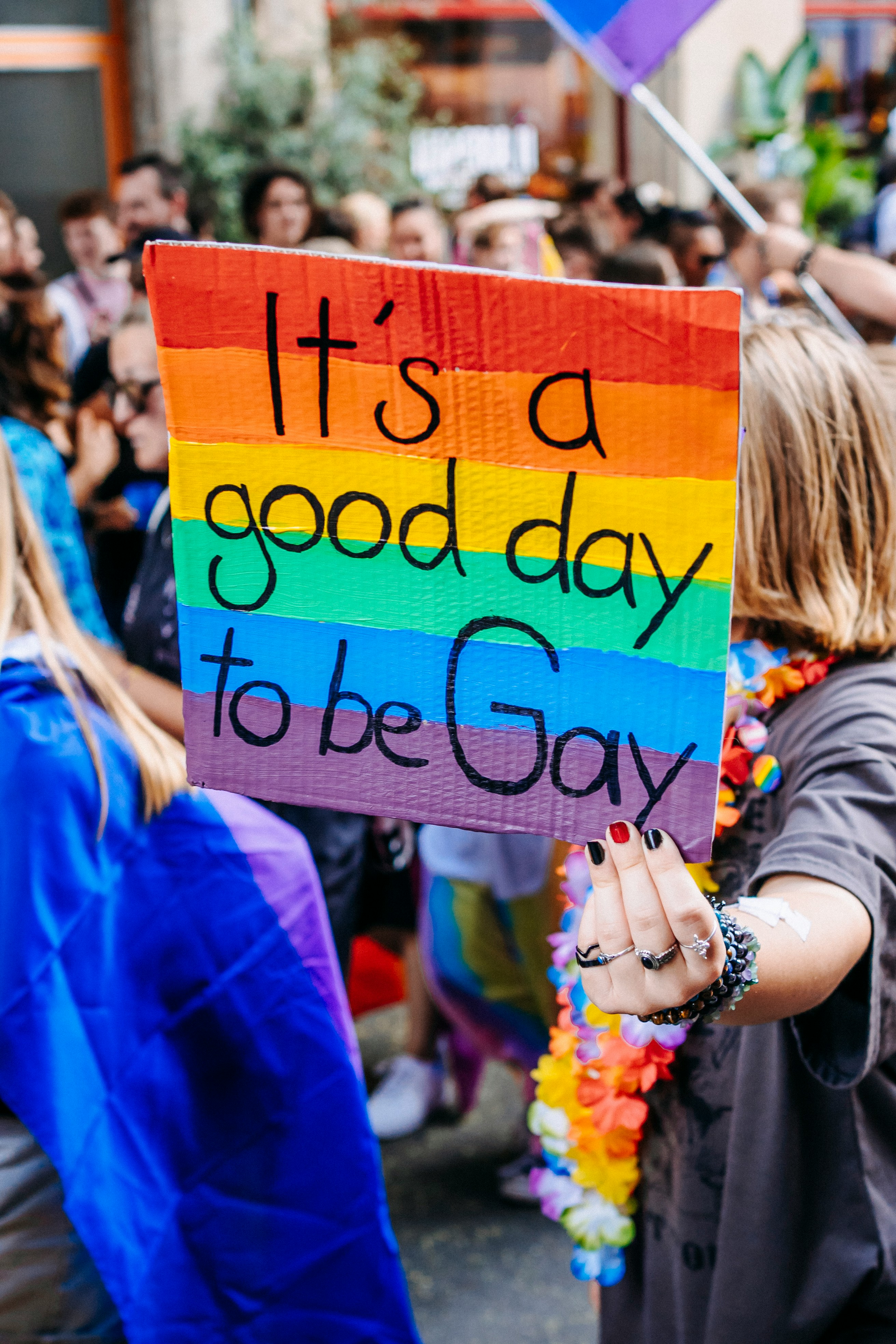
When LGBTQ+ people come together, we can actually do really amazing things. The people in power don’t want us to feel that way, so it’s vital we remember, and see examples of it happening.
Remember that $50,000 Target donation to Twin Cities Pride? Well, in less than 48 hours, the LGBTQ+ community raised that and then some. Because of the community support, the celebration won’t have to downsize as much.
But it’s not just mainstream Pride celebrations that benefit from community organizing. Some folks have put on their own community Pride celebrations, trying to eschew corporations and/or cops to create spaces that are safer, calmer, and more affirming.
One such celebration is Minneapolis People’s Pride, founded in 2021. This celebration has no corporate sponsors and doesn’t allow cops. They provide free food. They’re also more cognizant of the needs of their community, not serving alcohol and striving to create a more accessible space.
Does it have all the glitz and glam of one of the massive, corporate-backed events? Not at all. But in my experience of going, it has just as much community—if not more—and feels so much safer and more welcoming to me.
Events like Twin Cities Pride don’t appeal to me anymore. They’re overwhelming, exhausting, and I never know who’s just there for an excuse to get drunk and listen to music. But People’s Pride feels like somewhere I can look forward to going, somewhere I’ll feel at home with other LGBTQ+ folks.
This feeling of belonging is vital to our wellbeing, and it doesn’t just have to exist during Pride month. Many organizations commit to fostering this connection and interdependence year-round—many more than I could reasonably list here, so I’ll just give some of my favorites.
The Quatrefoil Library has been providing LGBTQ+ community space (without the pressure of alcohol) and resources since 1986. Located in Minneapolis, they offer a vital hub to help not just younger queer people, but folks of any age who just need a space to be in community. I haven’t had a chance to go yet, but I’m a fan of their work.
Organizations like the Human Rights Campaign and GLSEN do invaluable political and community work year-round. Their work has led to legal changes, educational policy changes, increased community resources, and more.
The Golden Crown Literary Society has created a hub for lovers of sapphic and WLW literature for over two decades. Rachel does a lot of work with them. They understand the importance of stories to the survival of our communities.
These are, by far, not the only ones. From national nonprofits to local small businesses, there are so many people dedicated to providing year-round community, resources, and activism for LGBTQ+ folks. And these are the faces I’d like to see at Pride 2025. The faces of queer and trans folks living their lives, interacting with others, and being part of a collective movement towards liberation and radical belonging.
Whether you view it as good or bad, the reality is that our Pride celebrations are at a turning point, and our alliances with corporations are shifting and need to be examined. How we move forward these next few years might shape Pride celebrations for decades to come.
I, for one, hope we lean more into our own communities and find the ways we can embrace, support, and uplift each other. We’re strongest together, and I hope the next few years reinforce that for us. Happy Pride, y’all.
What are your thoughts on the changes to Pride celebrations? How would you like to see these spaces be different? I’d love to know! Let me know in the comments on this post if you’re so inclined.
Want to receive once-a-month updates from me, directly in your inbox? Add your email below to subscribe to my newsletter. To prevent spam, you may get an email asking you to confirm your subscription.
No Comments