
Jan. 2025 Newsletter: What I’ve Been Up To
Welcome to my first newsletter of 2025! Each month, I try to share what I’ve been up to, what things I’ve published that month, and exciting news if there’s any to be shared.
News and updates
January has been a time of big change, for myself and our broader social/political landscape. Ashton and I are working to bring more content, resources, and hope to all the people who need it right now. Stay tuned for more about that in the coming months!
Blog posts from this month

There are many things I’d like to say heading into the new year, but I can only say so many at once. To start off with, I have a hopeful message for all of my queer, trans, sapphic, and otherwise awesome readers: For LGBTQ+ People, It Has Been Worse. Here’s How We Persevere. This post reminds you that you’re not alone, and you don’t have to figure it all out on your own.
ICYMI: My social media highlights
As explained in the post linked above, I’m no longer focusing my energy on checking my social media or creating unique content for it. I’ll share brief updates when blog content is posted, and that’s about it. Starting next month, this will no longer be a section in the newsletter.
Disability support lessons from my dog
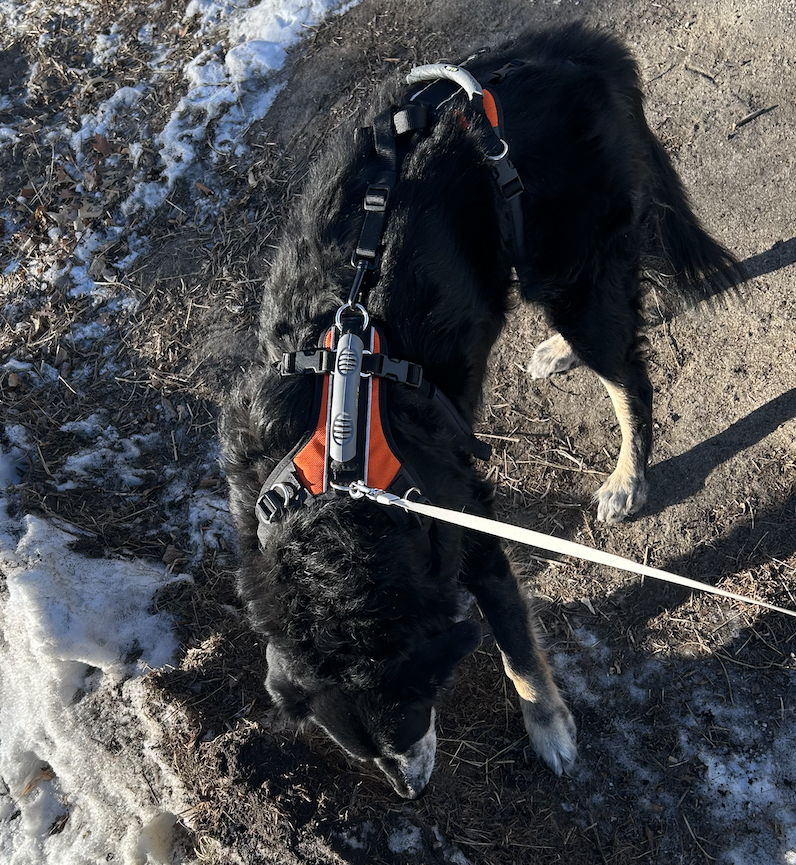
Sabel and I have had ample opportunities to use her new support harness during the icy days of January. The harness allows me to support her hips or her whole body when she’s on slippery surfaces or needs to use stairs or a ramp. Sabel is nearly 13 and a German Shepherd/Border Collie mix who’s now dealing with arthritis in her spine and intervertebral disc disease, which means that the nerve signals between her front legs and her back legs are somewhat impaired. We found a great vet who specializes in dog PT and we’re both learning a lot!
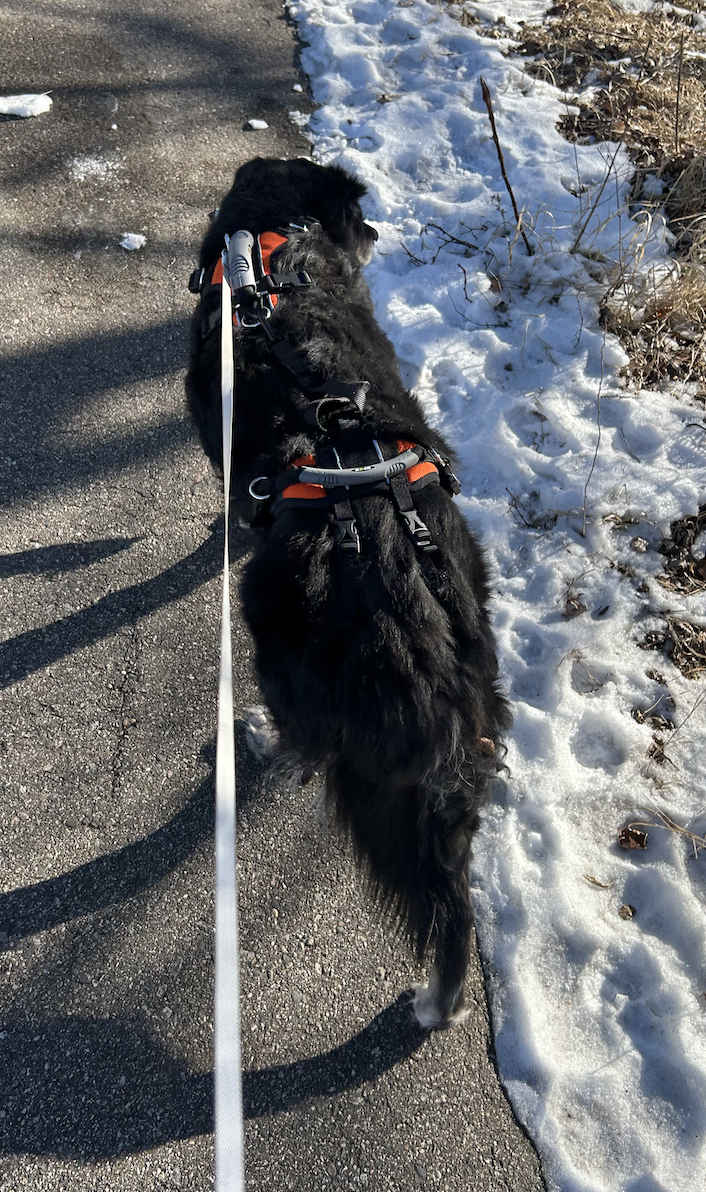
She’s been very excited to do more physical therapy exercises (especially on the very cold days)— and this helps me do my PT exercises more often. I have hypermobile Ehlers-Danlos Syndrome (hEDS), which means at any given time, one or more of my joints needs extra support to avoid pain and injury. I own a lot of joint support braces and every place where I sit in my house has multiple ways to support my back.
Sabel is a dog who adores people and, of course, loves her walks. Watching her resist wearing the support harness and then begin to associate it with walks and people is super helpful for me dealing with my own resistance to needing postural support. I feel more playful about my resistance and am reminded that the better support I give myself, the more I can do!
She’s also reminding me of how many things we each do really well. She’s amazing with people: calming them down, getting them to play with her and fall in love with her. One of the things I’m becoming good at, because of the hEDS, is lifting heavy things with good posture. Having stronger muscles supports my joints because there’s more muscle to take over for the loose ligaments. This also means I can support Sabel as needed and even carry her up or down stairs in emergencies. Plus, learning how to pace her activity levels as she ages helps me in pacing myself.
Does this mean that I’m miraculously never going to get angry at having to use joint braces and support pillows for what seem like simple activities? Absolutely not. Sabel still doesn’t like when the support harness goes on. But she adapts and we go have fun— and I plan to at least keep learning from her.
Ashton’s “Things that have brought me joy recently”

My Oblivion playthrough continues, although is likely nearing its end. I’ve also enjoyed playing The Outlast Trials for the first time, being a long-time fan of the series. I had to quit the first trial due to being too scared, so it’s definitely doing well as a horror game. Another horror game (this one I breezed through) I played this month is Carrion. A short, sort-of-sweet adventure where you play the monster, not the people. It’s got a good story and very satisfying gameplay!
Lastly, I read a fascinating book this month. Lucida Intervalla by James Carkesse (1679, reprint 1979) is likely the first published book of English poetry written by an asylum patient. Although it isn’t formally fantastic poetry, it provides wonderful insights into asylum treatment and attitudes at the time. Carkesse frequently harps on the argument that the doctors are the mad ones, not he, showing us how old this response to institutionalization really is. Sound intriguing? You can read it for free thanks to archive.org! (Although sadly this version does not have the commentary included in the 1979 reprint.)
Stay tuned next month for more blog posts, resources, and another newsletter. Thanks for being a reader!
No Comments