
September 2025 Newsletter: A Busy October and Co-Editing a Lesbian Stories Issue
Pictured above, from left to right: Beja Puškášová, Rachel Gold, Addie Daab, Judith Katz, Katherine V. Forrest, Ella Stern, Penny Mickelbury, and Kendall Kieras.
Welcome to this month’s newsletter! Each month, I try to share what I’ve been up to, what things I’ve published that month, and exciting news if there’s any to be shared.
News and updates
With the official start of Autumn comes a new hub page! LGBTQ+ Tarot and Magic includes resources, readings, ponderings, and more on all the great ways magic and queerness can intersect. Just in time for that spooky seasonal Tarot reading, or another tool to promote self-exploration as the days get colder. Give it a read to learn more!
Additionally, I’ll be at Gaylaxicon 2025 with Stephanie Burt and fellow Macalester professor Emma Törzs, October 3-5, 2025. It’ll be a fantastic weekend of LGBTQ+ literature, stories, and fun conversations. I’ll share my full schedule, as well as Stephanie’s events, soon.
Also next month is the launch of the next Sinister Wisdom issue, co-edited by yours truly. There will be a virtual launch event on Tues, October 21 at 6pm Central time. You can register at that link (it says 7pm, Eastern time, which is 6pm Central). Attendance is free, so I hope to see you there! Read on to see some of my reflections from co-editing this issue.
Lastly (lots of updates this month!), I was mentioned in the New York Times! Stephanie was interviewed on Taylor Swift, literature, geniuses, and more. It’s a lovely read if you’re interested in any of those topics of Stephanie’s work in general.

Blog posts from this month
AI, especially generative AI, has been on a lot of people’s minds recently, including mine. I’ve been reflecting on its usage to aid my writing process, especially when dealing with pain. AI Assistance for Writing While Overwhelmed covers my thoughts on that, explanations of how it can be helpful, and some of the less beneficial ways AI can be used.
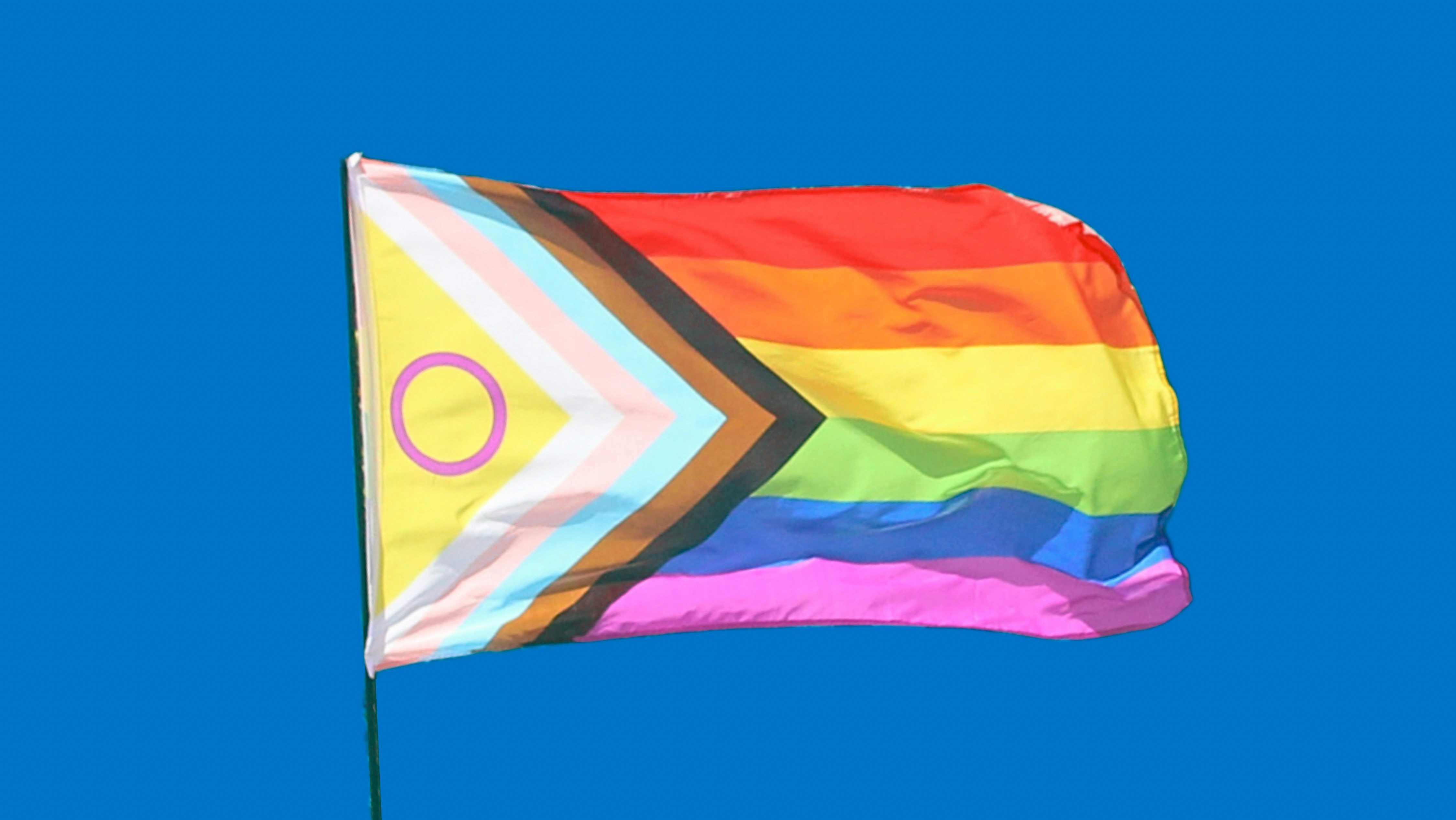
Over the summer, Ashton read The Queering of Corporate America by Carlos A. Ball. It taught them many things about the history of big business’ involvement in LGBTQ+ politics throughout American history. In part one of two, they investigate the utility of partnering with corporations to promote LGBTQ+ equality, as well as its dangers. Read more at The Role of Big Business in LGBTQ+ Politics, Pt. 1: Gathering Tools from Our History.
What I Learned Co-Editing a Lesbian Stories Issue of Sinister Wisdom
When my former writing professor Judith Katz showed up at my office and said, “Let’s co-edit a ‘Lesbian Stories’ issue of Sinister Wisdom,” I was intrigued. I hadn’t done a big editing project before. I would learn new things. We could get students involved. And I do have opinions about lesbian stories.
The intergenerational aspect was what really hooked me when Judith proposed it. In large part because we don’t grow up in families with each other most of the time—when young queer people find other queer people, they’re often finding people their own age. Connecting across generations makes us all stronger. I had a student tell me once that I was the oldest queer person they’d ever met in real life, and the next oldest was twenty-eight. When you never see yourself as a successful adult, it’s so limiting.
I said yes. But I also told Judith I wanted to bring some other editors on board, and she agreed—especially when I told her who I had in mind.
Building the Editorial Team
First off, to put together a collection of lesbian stories, we needed Katherine V. Forrest, because she knows lesbian stories better than anybody else I know. Katherine has been my editor for six of my seven novels. Having her on the team for this Sinister Wisdom issue meant I got to interact with her as a fellow editor.
I also wanted Penny Mickelbury on the team and figured once I had Katherine, Penny would not be able to say no. I worked with Penny for a year in the 1990s at an LGBTQ newspaper and knew we’d work together well. I respect her as both a journalist and novelist. Plus I knew that I couldn’t be on a team with Penny and fail to make sure there’s BIPOC representation. Not that I expected her to shoulder the burden of including BIPOC authors—that would be a shitty thing to do to a friend—rather that in making sure she didn’t shoulder that burden, I’d move our team and issue in the right direction.
The connections ran deep: Katherine had edited Penny’s work too and we became this whole interconnected square where everyone had worked with at least two other people in the editing team. We all appreciated deepening our relationships with each other by hanging out and talking about these stories.
The Learning Curve
I may have been a little ambitious for my first time (an understatement). Five interns proved too many for me to manage effectively. If I do this again, one to three is the ideal number. I’m also not the best person in the world for managing details. Next time (if there is one): administrative help!
It was a blast to read everyone’s comments on the stories. The interns and editors all had access to the stories in Submittable, which includes a chat space to talk about the stories. To see this diverse group of people reacting in different ways—and sometimes in the same way—was such a revealing process. We had stories where everybody who read it said “Yes, this one!” We had stories where the majority said yes but someone had qualms. And then some stories where everyone was like, “Nope, absolutely not.”
Seeing where we all came together on a story, and where we had differing opinions and why, demonstrated something crucial as both an editor and writer: different people react very differently to the same story. I knew this intellectually, but seeing it play out over dozens of stories helped me integrate it and also to better discern when the different reactions arose because the story was unclear or because it spoke mainly to a subset of our readers.

What Makes a Lesbian Story?
One of the most valuable parts of this process was wrestling with the question: what is a lesbian story? I love how evolutionary biologist Joan Roughgarden talks about sparrows—you can’t have one example of a sparrow because sparrows are too different from each other. If you want to talk about what a sparrow is in North America, you need at least twelve. That’s how I think about lesbian stories. In our case, we needed at least eighteen voices from our contributors, and counting the interns, students, and editors, we had twenty-seven or twenty-eight voices approaching what lesbian stories can be.
What emerged was a sense of broadly defined connections among women and people who are femme-identified in some way. Stories about how lesbians find and connect and relate with each other in different ways. Stories about coming out and coming into lesbian identity. But also stories that center how lesbian identity intersects with other systems.
One piece I argued strongly to include was Elaine Shelly’s “On Language and Pain”—a story about a woman in relationship to her own body and the medical system as a Black lesbian with multiple sclerosis fighting cancer. That intersection of identities and how she’s treated by the medical system felt essentially lesbian to me. The well-being of all lesbians is at the heart of lesbian stories.
The Joy of Editing
One thing that surprised me: I did some editing and no one got mad at me about it. That was genuinely exciting. I was nervous about giving feedback to established authors when we’re basically on similar footing in our careers. But everyone handled it gracefully, and I learned I could trust my editorial instincts.
Working with Julie at Sinister Wisdom also taught me something crucial about editing journals that I never knew: you don’t just put out a call for submissions, you also invite people to really make the issue you want. You do a combination of call for submissions and invitations to people you think would bring in the kind of work that enriches the issue. I had no idea we could do that, and I’m so glad Julie told me. It made the issue so much stronger.
What the Students Taught Me
One of the most rewarding parts of this process was working with five student interns from Macalester. Their fresh perspectives challenged my assumptions and enriched the project in ways I hadn’t anticipated. The students noticed patterns I might have missed. They observed how many coming out stories we received, which sparked a fascinating discussion about why that theme remains so central to lesbian storytelling. As one student noted, younger queer writers may feel societal pressure to write coming out stories, or they may not yet have other lesbian experiences to draw from. Another pointed out that we’re living through a new evolution of coming out—particularly around gender identity—which makes these stories feel both familiar and contemporary.
The students noticed how coming out stories have built-in conflict and accessible plot structure, which might explain their prevalence. But they also celebrated the stories that centered pleasure and joy rather than just struggle—stories where queer people get to be magical, get to experience love without it being a tragedy, get to exist in their full complexity.
They also highlighted what was missing from our submissions: more speculative fiction, more diversity in terms of race and age representation, and stories about queer people in midlife—raising families or simply living full adult lives beyond the coming-out narrative. As Judith wisely told them, “You realize that you’re all talking about the stories that you have to write now, right?”
The intergenerational aspect wasn’t just a theme of the issue—it was alive in our process. Listening to the students discuss butch-femme dynamics they were encountering for the first time, or hearing them appreciate perspectives from older lesbians that they rarely see in mainstream media, reminded me why this kind of cross-generational work matters so much in LGBTQ+ communities.
After reading all these submissions while coming into her own lesbian identity, one student’s takeaway was, “It’s so cool to be gay.” We joked about making that the tagline for the issue, but honestly, there’s something beautiful about that joy and appreciation for lesbian life coming through in the work and I think these messages are needed today as much as they’ve ever been.
The Privilege of the Process
The wide variety of submissions we received showed me the expansiveness of what a lesbian story can be. We had page limits, so we’re not the definitive word on lesbian stories, but I think we got a really good collection that represents many things that lesbian stories are.
Most of all, I appreciated how this project let me work with people I wanted to hang out with while creating something meaningful for our community. The process of selecting stories together, deepening relationships, and discovering the range of lesbian experience through literature—that collaborative joy is what I’ll carry forward from this project.
Would I do it again? Absolutely. But next time, I’m starting with three interns and getting myself an administrative assistant.
Stay tuned next month for more blog posts, resources, and another newsletter. Thanks for being a reader!
Reading this post on the blog? Enter your email to receive future newsletters right to your inbox! And encourage your friends to subscribe if you think they’d enjoy.
No Comments