
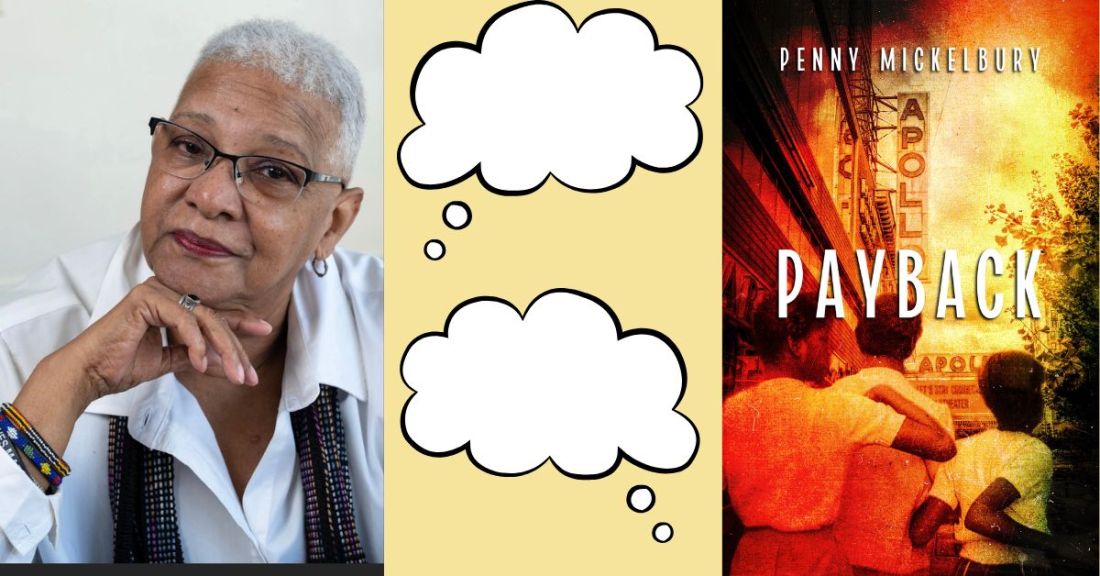
Payback: Interview with Penny Mickelbury
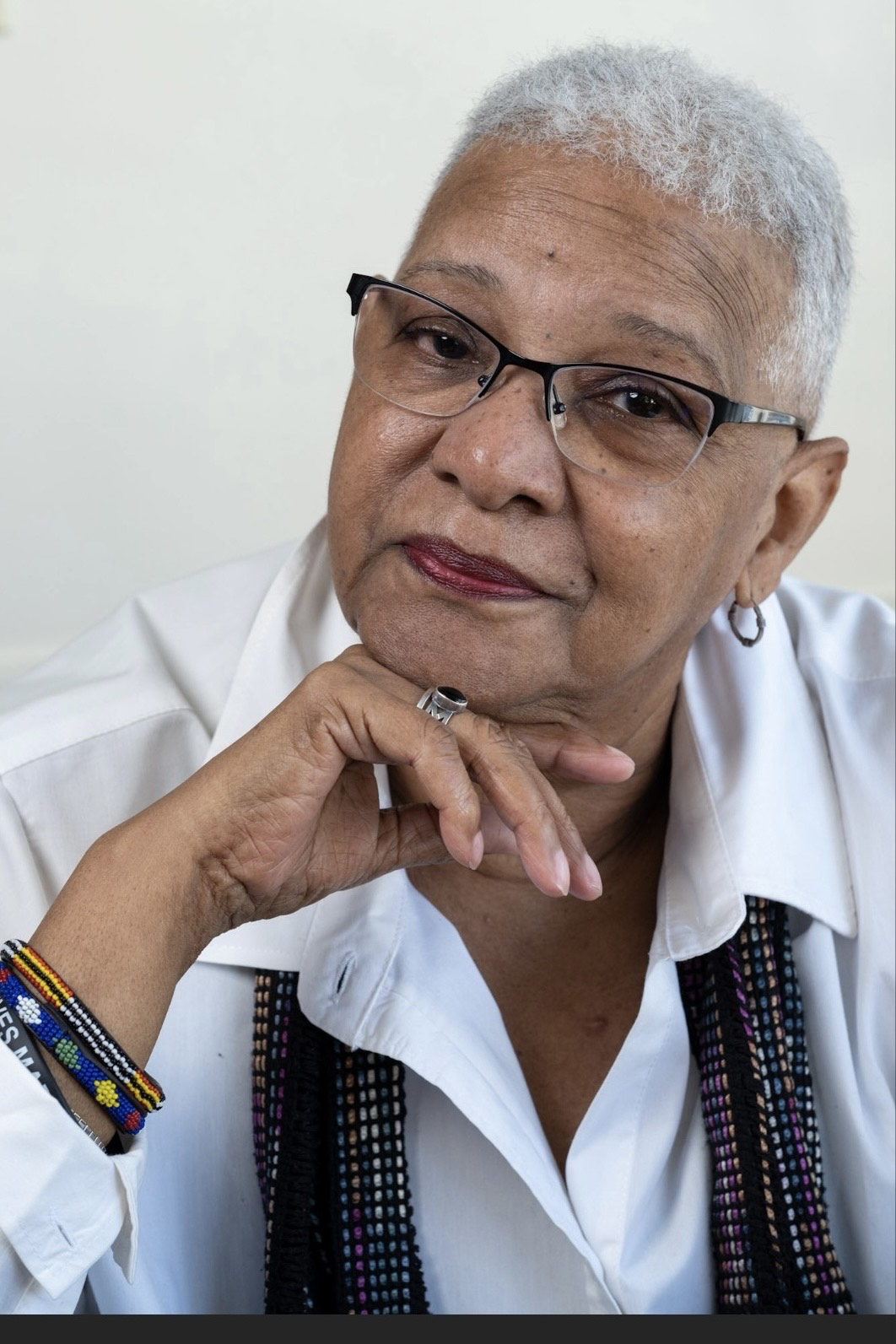
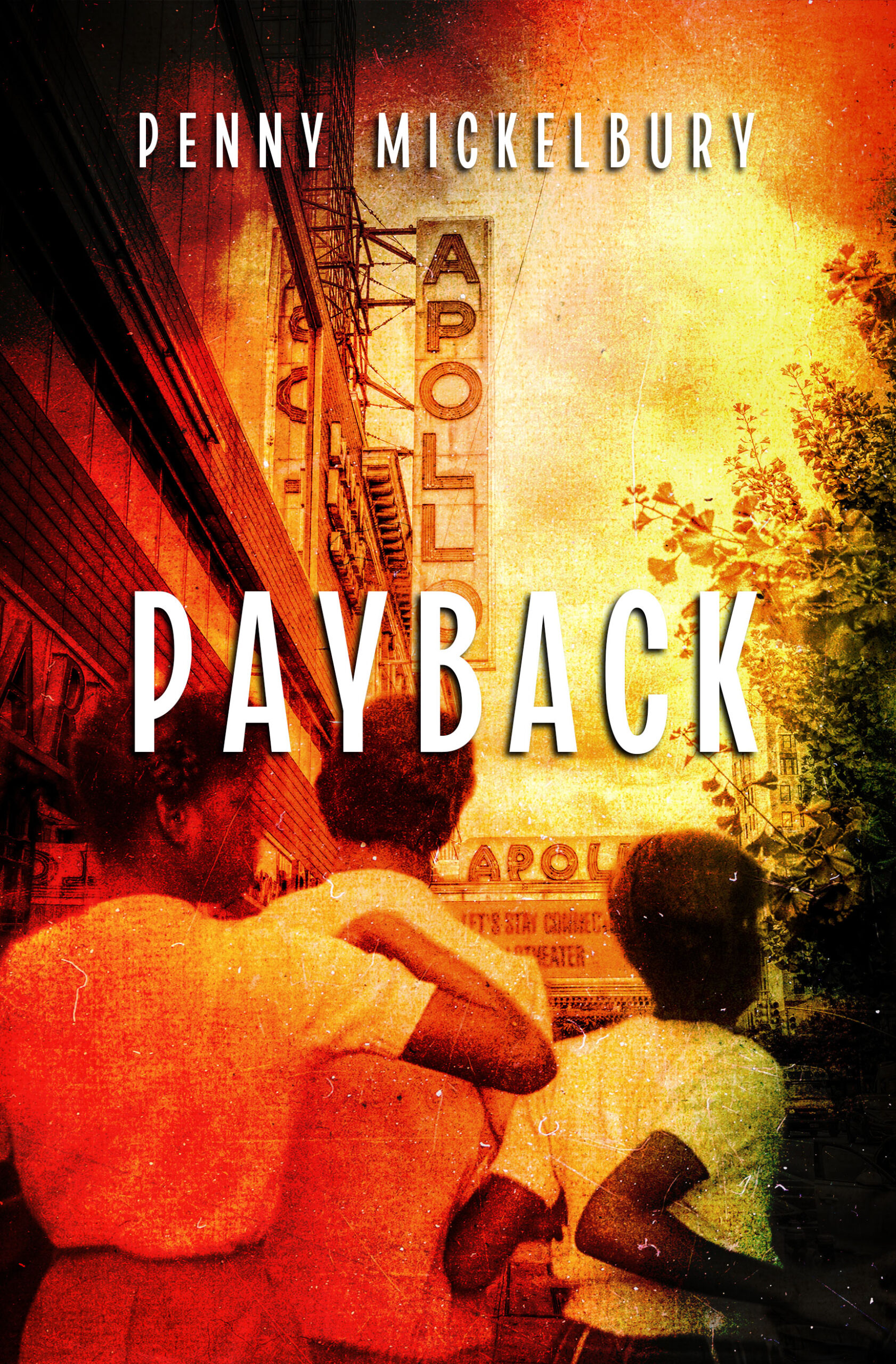
Before Penny Mickelbury became the author of 17 novels and a short story collection, she and I worked together at the LGBTQ newspaper in Minneapolis for about a year in the 1990s. We reconnected a decade ago and have been excited to read each other‘s novels and talk about a wide variety of work. We are also two of four editors on a forthcoming issue of Sinister Wisdom – a long-running lesbian literary, theory, and art journal. Look for our issue this October! Penny‘s latest novel, Payback, is an important addition to LGBTQ historical works and I’m excited to interview her about it.
Content warning: This post contains non-graphic discussions of violence, including violence against queer/trans people and people of color.
Rachel: To me, Payback reads like parts of it are a primer about resistance and resilience and family and love. What went into creating the extraordinarily loving community in this book?
Penny: My life, my life experiences, Black communities in this country. We made a way out of no way. Family comprised people that you were related to, but also a lot of people that you weren’t related to, people who didn’t have family. So we’d say, “Well, come on in and have some dinner, have a meal.” People that were like you and not like you, but what you shared was the experience of being colored in America.
Harlem is this very compressed, close-up, personal space where all kinds of people live. What people do not understand about being Black in America is that there have always been highly educated and uneducated, well-to-do and poor as church mice. There was no looking down upon someone who may not have been educated. We support and protect the people that have become our family.
Gay people have always had a place in our culture. My mother was a librarian at Spelman College. There were several gay men and women professors on that campus. When mother would have faculty gatherings, they would be there. Everybody knew; it wasn’t a thing. People weren’t waving flags, but the head of the drama department was a good friend of my mother’s. He was the head of the drama department at Spelman College, a graduate of Yale University. I can recall a party where he was there and one of dad’s friends said something—and my father stopped him cold. He said, “The man is a friend of mine.” And that was all, the rest of his life was not a part of the discussion.
My grandmother, my mother’s mother, was a college graduate. Her mother, my great-grandmother, could not read and write. All of the boys had to go to work so the girls, my mother and my grandmother, could be educated so they would not have to go to work in a white home. Because if they did, what would happen was generally very well known, so it was like, “We’ve got to keep the girls out of the white man’s home.”
Rachel: And we see this reflected in the characters in your novel, a physician and a musician.
Penny: In Payback, the principal characters are both highly educated women, and one of them is rich. She’s rich because her father, who was a professional man, a musician, bought a life insurance policy from every Negro life insurance company in America because he saw that as a way of supporting Negro businesses. Well, he and his wife and their youngest child were murdered, and our character in Payback was the sole beneficiary of three people and four or five life insurance policies, which left her a very wealthy woman at that time and place. She said more than once, “They could have it all back if I could have my family back.” But she couldn’t have her family back, so she used that money to benefit her community when and where she could.
Rachel: And the two main characters aren’t the only Black women in the novel with powerful influence in the community.
Penny: You have Madam Saint Clair who was a numbers runner, but she was also a banker because in her community Black people could not go get loans. She lent money to people who needed money. That’s just the way it was. And when she found out this woman was a Black female doctor, she just gave money and said, “I want every woman in your practice to be able to get seen.”
Rachel: That’s a great scene when she goes to see Grace in person. Just that “I had to see this for myself”—I thought that was a touching moment.
Penny: Because she had never seen a Black female physician.
Rachel: And her agreement to finally be seen by a doctor.
Penny: Yes. Because “The men hurt me, and I’m not going back. And so now I can go to a woman and be treated with some dignity.” But this was not an educated woman; she was just rich.
Rachel: I think that’s part of what’s beautiful about the scene, you’ve got someone who we would say has a ton of street smarts, not formal education, but a heck of a lot of informal education. The mutual respect between her and Grace, as a very educated woman, I thought was really beautiful.
Penny: And women who just respect each other because they exist. There’s Queen Esther, who is a queen, and that’s alright with everybody. The men, who are straight men, they respect this person because she does her job and she does it well. She respects people; people respect her.
Rachel: Some of the problems solved in Payback are solved with money, but even more problems are not solved with money. There are so many ways that problems get solved in this novel, with food and affection and community. Are there other ways you want to highlight? What are some of the ways that stand out for you about how your characters solve their problems?
Penny: Well, using Queen Esther and male Bobby, Boy Bobby, as examples. Gay men or drag queens would go trekking on the river. They could just go there because it was out of the way, but they were also victims because straight men would lure them there, not for sex but just to beat the shit out of them. A friend of Boy Bobby’s was almost killed. And so he went with Queen Esther to set a trap for whoever was luring these people.
He got severely injured, and he showed up at the home of Girl Bobby and Grace. And Girl Bobby wakes up Grace and says, “Bobby is at the door. He’s bleeding all over the place. You gotta help him.” And of course she does.
Rachel: In this book, everyone helps in the way they can to the degree that they can.
Penny: The degree that they can. Yes.
Rachel: And everyone’s ability to help is honored, it seems.
Penny: And without question. I mean, nobody questions in this book where Grace and Bobby get money from. Grace is the doctor, and even in the early 1950s, doctors earned more money. Even women doctors earned more money than not only janitors but school teachers and other professionals.
One of my favorite characters is Eileen, who is married to a man because she always wanted children. One of my dearest friends, who was also an ex of mine, always wanted children. Women do want children, and so she marries a man. But she’s been with her lover Joyce since high school. They met in high school and stayed together all through college. Joyce knew she wanted children, so Eileen is married to this man who understands, and they have two children. But Eileen lives with Joyce unless and until she has to go to some function with her husband. He’s an important man in business in Black Harlem, so she has to get dressed up and go be his wife. Not a problem.
Rachel: I want to touch more on the background for writing this novel and the deep authenticity.
Penny: When I write about 1950s Harlem, I grew up then. In the early 1950s I was not an adult, but I was born. I know what was happening, what people felt, and what happened to people. [Like] the parents of the character being murdered in Georgia because they were colored people in a brand-new Packard—they had to have stolen it, they had to have been criminals—and so they were murdered.
I know about these things. I know they happened. So yes, I can bring an authenticity to that. I know what it feels like to be discriminated against, but mostly because of my color and my gender, not because of who I sleep with, because the color and the gender is out front. So: “We don’t want you in here.” And you can only say, “Oh, we don’t want you in here, dyke,” because I give you permission to know that about me. Now, I’ve never hidden it, but there weren’t many people who were going to—back then, back when I was a younger woman—who were going to throw that at you.
Rachel: There’s also what I found to be a pleasant amount of shooting people who were real assholes in this book. Also, some knifing. Knifing and beating may or may not have been historically accurate, but was certainly in this year, 2025, delightful to read. I do love a good revenge story. What did it feel like to write this?
It felt good to write it because we have not always been able to live it.
Penny: At the very beginning of the book: Bobby goes to the Savoy Ballroom to dance. She’s supposed to meet a girlfriend there, so she’s got on tails and she has a cane, and she runs right into some guys really harassing what looks like a woman. But it’s not—it’s someone in drag. Bobby is telling these guys, “Stop that,” because she’s in a tux and tails, and they think she’s a guy. She’s like, “What are you doing? Stop that and leave the lady alone.” They say, “Oh, she’s not a lady.” Well, they keep on, and Bobby uses that cane and hits one of them across the wrist—the bone snapped and she hurt him. It felt good because they were bullies, and bullies rarely get their comeuppance.
Rachel: There’s a way in which a lot of times in literature, physical force is a metaphor also for emotional force or includes emotional force. Hopefully many of us are not going to be in physically threatening situations, but we may be in a lot of emotionally threatening situations. I appreciated that nod to sometimes you need to be forceful with a bully. You need to stand up and say no as forcefully as they need to hear it.
Penny: In that time and place, there weren’t a lot of options. There—who are you going to call? Particularly, we have to remember in Black communities then and now, to a certain extent, you didn’t call the police. They weren’t there to help you. In the 1950s until relatively recently, you had to take care of your own. There’s nobody else; there was nobody else who was going to do it.
Rachel: And in some ways, we do a better job at it also.
Penny: We do. We don’t appear and go, “Look at this person over here. You look like trouble.” No, I know who trouble is, and I’m not confused. I know who the bad guy or the bad woman is. I’m not confused about that.
You know, that thing we had going for us—we knew our communities. And everybody who was poor was not a bad person. Everybody who was unkempt was not bad. They were unkempt because that’s all the clothes they had. We were less judgmental. I think progress has changed that, so now some of us are as judgmental as [non-LGBTQ people]. We look at our own people and go, “Ooh.”
Rachel: For young people reading this novel, what do you hope they take away? What do you hope they learn both about history and that they can apply to their lives now?
Penny: I hope they learn that history is not always in the past. That we move forward as a people together. Because if we allow separation, whatever it’s based on, we weaken ourselves. That’s what I want young people to walk away with from everything we do: We are in this together. And I think if there is a value to be had for what’s happening now, that’s it.
Penny Mickelbury is the author of twelve mystery novels in three different series, five novels of historical fiction, and a short story collection. Currently Bywater Books is the sole publisher of Penny’s books, including the newest titles in the Mimi Patterson/Gianna Maglione mystery series, You Can’t Die But Once and Death’s Echoes, and three novels of Historical Fiction: Two Wings to Fly Away and the sequel, Two Wings to Hide Her Face, and Payback. Penny won the 2018 Independent Publishers Association Bronze Medal in the Mystery/Thriller category for Death’s Echoes. Penny is the 2019 winner of the Alice B Medal for her contributions to the field of lesbian literature. Her books have been Lammy and Goldie finalists. The former Washington, DC-based newspaper, radio, and television reporter was inducted into the National Association of Black Journalists Hall of Fame in 2019. Mickelbury is an Atlanta native currently living in Los Angeles.
Have more thoughts on our interview or Penny’s work? Let me know in the comments on this post if you’re so inclined.
Want to receive once-a-month updates from me, directly in your inbox? Add your email below to subscribe to my newsletter. To prevent spam, you may get an email asking you to confirm your subscription.
No Comments