
Sapphic Literature and Queer Elders: GCLS 2025 Highlights
When people discover sapphic and LGBTQ+ literature, it’s a miracle. I remember being a teen and sneaking up to the “gay and lesbian” shelves in bookstores. (Because it was long enough ago that we didn’t have the acronym yet.) The first time I walked into a queer bookstore, it was a miracle. And it’s a miracle that repeats for me every year at the Golden Crown Literary Society (GCLS) conference–my favorite conference to attend and a haven of sapphic literature.
If you’re new to the term “sapphic literature,” it’s an umbrella phrase that includes lesbian, bi and queer women’s literature along with nonbinary voices. (I was going to add “trans” in there, but trans women are lesbian, bi and queer women, so that feels redundant.)
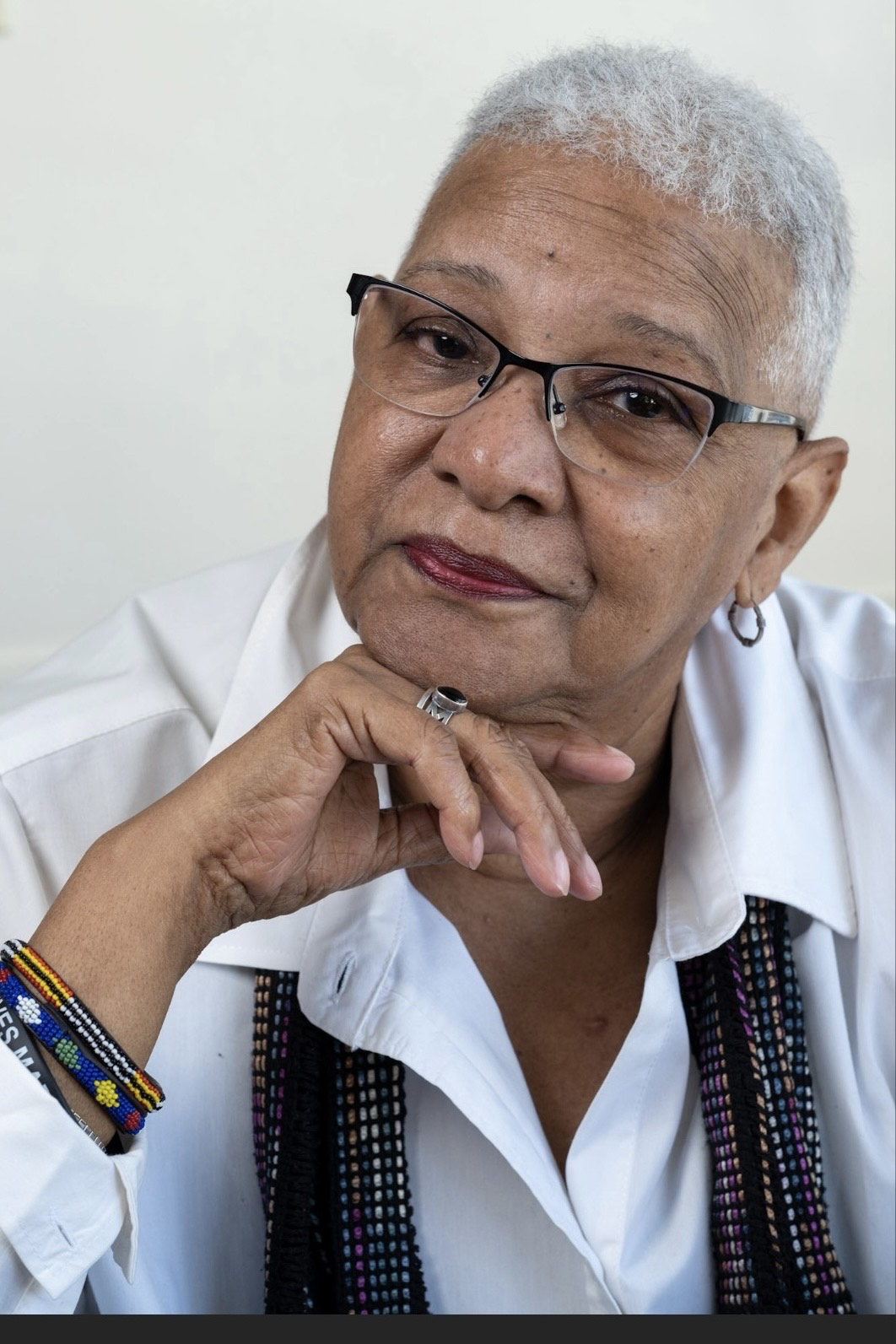
This year at GCLS, my friend Penny received the Trailblazer award! We interviewed her a few months ago, so check that out to learn more about her work and life.
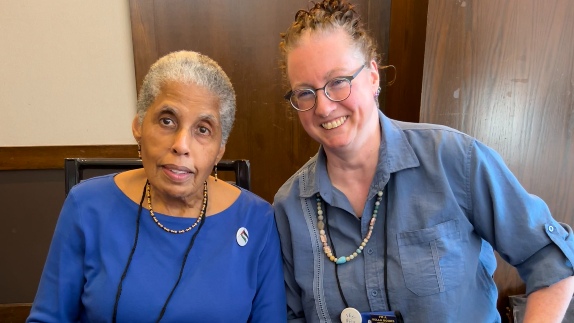
I also got to meet and spend time with THE Barbara Smith. Capital “THE” because when I saw her name on a panel, I did not realize this meant the very same Barbara Smith that I teach about in my class. (In my defense, I was on a multipart trip and didn’t read the schedule closely.)
Barbara Smith is a founder of the Combahee River Collective in the 1970s–a Black feminist organization that was socialist, class-conscious and inclusive of lesbians and other sexual diversity. Smith was doing intersectional work and writing about it well before the term “intersectionality” was created–and coined the term “identity politics.” In 1980, she and Audre Lorde created Kitchen Table: Women of Color Press, which published significant works by women of color for fifteen years and changed the publication landscape for such works.

An absolute highlight of the conference was listening to Penny and Barbara talk about their experiences in the 1960s and beyond. Although they grew up in different parts of the country, they quickly aligned similar stories of injustice and protest. Listening to them reminded me how much work was done before I was born, and how much is still possible today.
This called to mind a recent study about moral decline that showed, shockingly, that regardless of when a person was born, they tend to think that the world has been on the decline from that point. I definitely feel like we’re at an apex of moral decline in the US right now–but listening to Penny and Barbara, I was reminded of how much progress has happened and how powerful social change movements are.
If you’re curious, the paper is “The illusion of moral decline” by Adam M. Mastroianni & Daniel T. Gilbert. The authors found support for two reasons for this illusion: “people may encounter more negative information than positive information about the morality of ‘people in general’,” and “numerous studies have shown that when people recall positive and negative events from the past, the negative events are more likely to be forgotten, more likely to be misremembered as their opposite and more likely to have lost their emotional impact.”
The authors concluded: “biased exposure to information about current morality may make the present seem like a moral wasteland, biased memory for information about past morality may make the past seem like a moral wonderland and when people in a wasteland remember being in a wonderland, they may naturally conclude that the landscape has changed.” Of note, in the current wasteland, participants only felt that morality declined in people they didn’t know well–in their social circle, morality actually increased.
When asked about times before they were born, participants did not register a moral decline. That is a huge finding to my mind. We have a clear bias that the world we live in is getting worse, but in many ways it isn’t–and we owe tremendous gratitude to those who fought for the positive conditions we’re now experiencing. Listening to our trailblazers helps counterbalance this illusion of moral decline and its accompanying feelings of helplessness.
Speaking of persistence and transformation, it turns out that Barbara Smith is also a Scorpio! (Like me.) She very much has the Scorpio energy I hope I’m growing into. Yet another reason queer intergenerational connection are so important–we thrive with good role models!
I’ve been reading Barbara’s essays in The Truth That Never Hurts to find the parts I want to assign when I teach LGBTQ2S+ Literature again next spring. Here are some key quotes, spanning her writing from the late 1970s to the mid-1990s and still relevant today:
Perhaps the most maddening question anyone can ask me is “Which do you put first: being Black or being a woman, being Black or being gay?” The underlying assumption is that I should prioritize one of my identities because one of them is actually more important than the rest or that I must arbitrarily choose one of them over the others for the sake of acceptance in one particular community. I always explain that I refuse to do political work, and more importantly to live my life in this way. All of the aspects of who I am are crucial, indivisible, and pose no inherent conflict.
Doing antiracist organizing does not mean that one has to stop organizing against homophobia and sexism, as demonstrated by the multi-issue political practice of lesbian feminists of color. Indeed, given how linked all the systems of oppression are, organizing around what may seem to be one issue should quickly lead to work around related ones. For example, lesbians and gays have a history of being mistreated by the police, so working against police brutality has direct positive consequences for our lives. Opposing the Christian right wing’s homophobic campaigns logically necessitates opposing their assaults on women’s reproductive freedom, their racist efforts to institute school vouchers, and their anti-immigration initiatives.
I am sure that many women here are telling themselves they aren’t racists because they are capable of being civil to Black women, having been raised by their parents to be anything but. It’s not about merely being polite: “I’m not racist because I do not snarl and snap at Black people.” It’s much more subtle than that. It’s not white women’s fault that they have been raised, for the most part, not knowing how to talk to Black women, not knowing how to look us in the eye and laugh with us. Racism and racist behavior are our white patriarchal legacy. What is your fault is making no serious effort to change old patterns of contempt–to look at how you still believe yourselves to be superior to Third World women and how you communicate these attitudes in blatant and subtle ways.
You have to comprehend how racism distorts and lessens your own lives as white women–that racism affects your chances for survival too, and that it is very definitely your issue. Until you understand this, no fundamental change will come about.
That we still have work to do could be good news. It means future generations will have something to thank us for. I recommend reading the work of Barbara Smith and Penny Mickelbury, and then if you’re in the mood for a young adult novel, check out In the Silences.
Want to receive once-a-month updates from me, directly in your inbox? Add your email below to subscribe to my newsletter. To prevent spam, you may get an email asking you to confirm your subscription.
No Comments